TPO Roofing Guide for BC Commercial & Industrial Buildings
TPO roofing is by far the most popular commercial flat roofing system in British Columbia. It is a single-ply roofing system that is durable, energy efficient and weather resistant for commercial buildings. TPO roofs are heat-welded with seams that provide water-resistant connections for BC’s heavy rain and moisture. TPO roofing systems have been popular in warehouses, retail centres, strata properties, office buildings and industrial businesses for long term sustainability, low maintenance and low cost roof protection.
Serving Commercial & Industrial Roofing Projects Across British Columbia
TPO Roofing Quick Overview
The core specs every BC commercial property owner should know before specifying a flat roofing system.
Lifespan
20–30 yrs
Cost Level
Moderate Commercial Investment
Energy Efficiency
High (Cool Roof)
Very Reflective Surface
Maintenance
Low Routine Maintenance
Best For
Warehouses, Strata, Retail.
Commercial Flat Roofs
Repairability
Excellent – Easy Heat-Welded Repairs
TPO roofing or Thermoplastic Polyolefin Roofing is a single-ply roofing membrane that is made for commercial flat roofing systems and low-slope roofs. It is made of reinforced materials that provide waterproofing, flexibility and weather resistance.
One of the reasons TPO roofing systems are so popular in British Columbia is that they can withstand prolonged moisture exposure and are energy efficient. The white reflective roofing surface reduces heat absorption during warm days, and heat-welded roofing membranes preserve durable seams that resist water infiltration.
As a result of its overall performance, maintenance and installation efficiency, TPO roofing is commonly used on office complexes, warehouses, industrial buildings and strata properties.
Benefits of TPO Roofing
Why TPO has become the default specification for new commercial and industrial roof membrane systems.
Commercial property owners choose TPO roofing systems as they are also waterproofing, good energy-efficient and cost-effective for long-term protection. In BC commercial buildings susceptible to rain, humidity and thermal motion, TPO flat roofing offers an easy solution for maintaining a watertight building envelope.
Energy Efficiency
White reflective roofing surfaces are the least absorbed by the sun and may reduce cooling demand in warmer months.
Strong Heat-Welded Seams
Heat-welded roofing membranes provide strong watertight seams to keep them from being separated and moisture intrusion.
Cost-Effective Performance
TPO roofing systems provide excellent long-term value and low installation and maintenance costs.
Weather Resistance
Designed to withstand rain, wind, UV radiation and seasonal temperature changes.
Lightweight Roofing System
TPO roof membranes place less structural load on commercial buildings than other traditional systems.
Simplified Repairs
Most TPO roof repair work can be completed through localized heat-welded membrane restoration.
Get a free site assessment for your TPO commercial roof
Roofer Squad — serving British Columbia commercial & industrial properties. Contact us on Facebook
Common TPO Roofing Problems
The five issues our inspection teams find most often on aging commercial flat roofs across British Columbia.
Seam Separation
Cause
Thermal movement and improper welding practices over time.
Symptoms
Water infiltration along seams and visible membrane separation.
Repair Solution
Re-weld affected seams and install compatible reinforcement materials.
Membrane Punctures
Cause
Foot traffic, tools, rooftop equipment servicing activities.
Symptoms
Visible holes, leaks or membrane surface damage.
Repair Solution
Heat-weld compatible repair patches for TPO membranes.
Ponding Water
Cause
Poor drainage design or blocked drains.
Symptoms
Standing water remaining longer than 48 hours.
Repair Solution
Improve drainage pathways and correct roof slope deficiencies.
Flashing Failure
Cause
Aging materials and movement around penetrations.
Symptoms
Leaks near rooftop equipment or wall transitions.
Repair Solution
Replace damaged flashings and restore watertight seals.
Membrane Shrinkage
Cause
Long-term thermal expansion and contraction cycles.
Symptoms
Stress at seams, corners, and flashing locations.
Repair Solution
Reinforce affected areas and replace damaged sections.
Wind Damage
Cause
Severe weather and compromised attachment systems.
Symptoms
Loose membrane sections and lifted edges.
Repair Solution
Re-secure membrane and repair affected roofing components.
How TPO Roofing Systems Are Installed
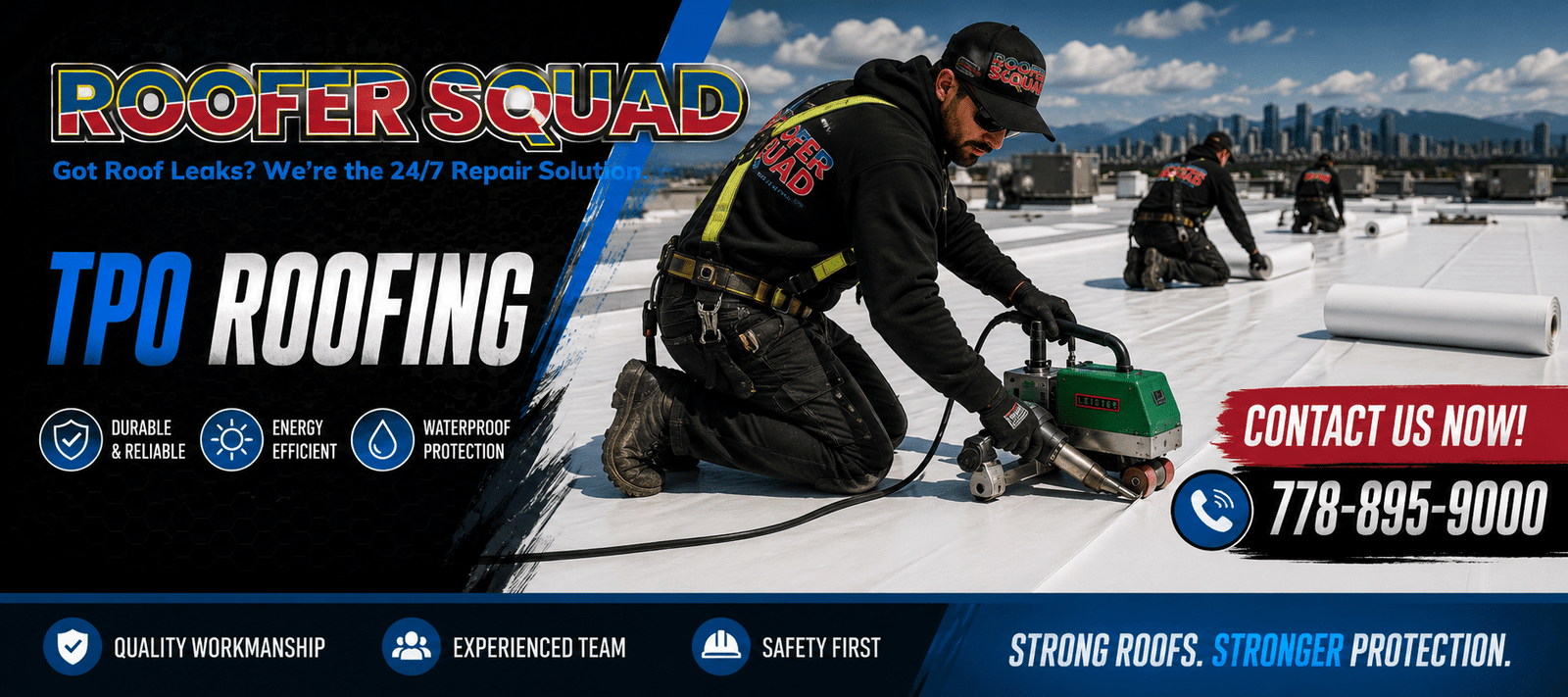
The installation of TPO roofing varies depending on the building design, wind uplift requirements, substrate condition and project requirements. Commercial TPO roofing systems can be attached, fully adhered, induction welded or placed on recovery boards. Each method has specific performance advantages for British Columbia commercial buildings, where moisture management, drainage and long-term membrane performance are important concerns.
Roof Deck Inspection and Preparation
The existing roof deck is inspected for structural integrity, moisture damage, and surface irregularities. Any deficiencies are addressed before insulation and TPO roof membrane installation starts.
Continuous Insulation Installation
Rigid insulation boards are installed to meet BC Building Code energy requirements. Proper insulation placement improves thermal performance and creates a stable substrate for the roofing system.
Mechanically Fastened TPO System
The TPO roof membrane is secured by fasteners and plates directly attached to the structural deck. This method is commonly used on large commercial and industrial buildings.
Fully Adhered TPO System
The membrane is bonded to the substrate with approved adhesives. Fully adhered systems have excellent wind resistance and are often used in buildings with complex roof layouts.
Self-Adhered and Induction-Welded Systems
Some TPO roofing systems use self-adhered attachment methods or induction welding technology to secure components and reduce installation time and enhance system performance.
Heat-Welded Seams and Final Inspection
All membrane seams are heat welded to form watertight connections. The completed TPO roofing system is subjected to a detailed checking process of seam integrity, flashings, drainage performance and installation quality.
TPO Roofing Maintenance
The maintenance of TPO roofing is integral to service life and repair costs. Frequent inspections in British Columbia are highly important due to heavy rainfall, debris accumulation and drainage problems affecting roofing in that province.
Maintenance saves money
Industry data shows commercial roofs on a structured maintenance program last up to 50% longer than roofs left to fail reactively. Small repairs caught at inspection cost a fraction of emergency leak callouts and interior damage.
Professional TPO Roof Inspections for Flat Roofing Systems
TPO flat roofing systems can only be maintained if they are professionally inspected. Detailed inspections help identify problems before they result in leaks, insulation damage or membrane failure and help to ensure the long-term maintenance of roofs and assist property owners in their planning for roofing investment.
Visual Roof Assessment
Inspectors assess membrane conditions, seams, flashings, and rooftop penetrations.
Drainage System Review
Drains, scuppers, and water flow patterns are examined.
Moisture Detection
Advanced methods are used to identify latent moisture beneath roofing assemblies.
Deficiency Documentation
Observed roofing deficiencies are recorded with supporting photographs.
Maintenance Recommendations
Clients receive practical repair and maintenance advice.
Get a free site assessment for your commercial roof
Roofer Squad – serving British Columbia commercial & industrial properties.
Cost of TPO Roofing in British Columbia
TPO roofing costs vary by building size, insulation requirements, roof complexity, accessibility and existing roof conditions. Every commercial roofing project needs to be evaluated individually for accuracy in terms of installation cost and long-term budget requirements.
Every commercial roof is unique and requires a site inspection for accurate pricing. Roofer Squad provides detailed, line-itemed estimates with no obligation.
Roof Size
Larger roofs will require more materials, labour and installation time.
Existing Roof Condition
Tear-off requirements can significantly influence project costs.
Insulation Requirements
In addition, the additional insulation increases the material cost and installation cost.
Roof Complexity
The number of penetrations and rooftop equipment increase labor needs.
Drainage Modifications
Drainage improvements may be needed before installation.
Access Requirements
Difficult site access can increase project logistics costs.
Membrane Thickness
Different membrane specifications affect the pricing of the overall project.
Warranty Requirements
Extended warranty options may influence installation standards and costs.
TPO vs Other Commercial Roofing Systems
How TPO stacks up against EPDM, PVC and modified bitumen — the other major roof membrane systems used across BC.
TPO vs EPDM
COST
Mid
Lower
Lifespan
20–30 yrs
25–30 yrs
Seams
Heat-welded (strongest)
Adhesive / tape
Energy Efficiency
High (white)
Low (black)
BC Climate Fit
Excellent
Very Good
TPO vs PVC
COST
Mid
Lower
Lifespan
20–30 yrs
25–30 yrs
Chemical Resistance
Good
Excellent
Best Use
General commercial
Restaurants, plants
Welded Seams
Yes
Yes
TPO vs Modified Bitumen
COST
Mid
Lower
Installation
Single-ply welded
Flameless Installation
Energy Efficiency
High
Low–Medium
Repairability
Excellent
Good
Weight
Light
Heavy
Frequently Asked Questions
TPO Roofing
The questions BC property managers ask us most about commercial flat roofing systems.
Most commercial TPO roofing systems last between 20 and 30 years with proper maintenance. TPO Roofing Guide
The membrane provides a waterproof barrier, and heat-welded seams prevent water infiltration. TPO Roofing Guide
Yes. Most localized damage can be repaired using heat-welded membrane patches. TPO Roofing Guide
Professional inspections are recommended annually as well as after severe weather events. TPO Roofing Guide
Industry best practice is twice per year — typically spring and fall plus after any major storm event. Roofer Squad provides documented inspection reports for asset management. TPO Roofing Guide
Why Choose Roofer Squad for Your TPO Roofing Project
Built for long-term commercial roofing performance in Canadian weather conditions.
Commercial Roofing Experience
Extensive experience with commercial flat roof systems across British Columbia.
BC Climate Knowledge
There are solutions for rain, humidity, and thermal movement problems.
Quality Installation Standards
Every project has strict installation procedures for commercial roofing.
Detailed Project Planning
A thorough assessment of projects can be done so that the project execution and performance can be successful.
Safety-Focused Practices
The installation approaches focus on worker, tenant, and property safety.
Long-Term Roofing Support
In the future, maintenance and repair services will protect roofing investments.
Request a Free TPO Roofing Estimate – No-obligation roofing estimate.
Planning a TPO roofing project starts with a thorough assessment. Roofer Squad provides professional evaluations and clear project recommendations for commercial buildings across British Columbia.
By submitting, you agree to be contacted by Roofer Squad about your roofing project. We never share your information.
Need Expert Help With Your TPO Roof?
Protect your building before small leaks become expensive damage. Roofer Squad responds to estimate and inspection requests within one business day.