Commercial Roofing FAQ BC – Roofer Squad British Columbia
Explore answers to Commercial Roofing FAQ BC about our commercial roofing services, including installation, repair, replacement, and maintenance across British Columbia.
Sort By:

TPO Roofing BC FAQ Roofer Squad
What is TPO Roofing BC and why does Roofer Squad recommend it?
TPO Roofing BC is a single-ply commercial roofing membrane known for durability, energy efficiency and waterproofing performance. Roofer Squad recommends TPO roofing for many commercial buildings seeking long-term value and reliable roof protection.
Why is Commercial TPO Roofing popular in British Columbia?
Commercial TPO Roofing performs well in British Columbia’s wet climate, with strong seam integrity, UV resistance and reliable waterproofing. Roofer Squad installs TPO roofing systems for BC weather conditions.
How long does a TPO Roofing BC system typically last?
Yes. TPO Flat Roofing is commonly used on warehouses, office buildings, retail centres, industrial facilities and institutional properties. Roofer Squad installs commercial TPO systems tailored to building requirements.
What are the benefits of Commercial TPO Roofing?
Commercial TPO Roofing provides excellent waterproofing, heat reflective properties, durable heat-welded seams, and strong resistance to weather exposure. Roofer Squad helps property owners to select systems that will maintain long-term building performance.
Can TPO Roofing BC help improve energy efficiency?
Yes. Reflective TPO Roofing BC membranes reduce rooftop heat absorption, which helps improve energy efficiency and cooling demand during warmer months. Roofer Squad installs energy-conscious roofing systems for commercial properties.
Can Roofer Squad repair existing TPO Roofing systems?
Yes. Roofer Squad provides TPO roof repair services for membrane damage, seam failures, flashing issues, punctures, drainage concerns, and commercial roof leaks throughout British Columbia.
How are Commercial TPO Roofing seams installed?
Commercial TPO Roofing membranes are joined with hot air welding equipment. Roofer Squad installs heat-welded seams to create watertight connections for long-term waterproof protection.
How often should TPO Roofing BC be inspected?
Roofer Squad recommends inspecting TPO Roofing BC systems at least twice annually and following severe weather events to detect roofing problems before costly repairs may be necessary.
How often should TPO roofs be inspected?
Most commercial TPO roofs should undergo professional inspections twice annually and after severe weather events to identify developing problems. Commercial Roofing FAQ BC
Why choose Roofer Squad for Commercial TPO Roofing BC?
Roofer Squad specializes in Commercial TPO Roofing, roof replacement, roof repairs and maintenance services. Our staff is well-versed in the British Columbia roofing landscape and our solutions are practical in their design and can be used for the long term.
EPDM Roofing BC FAQ Roofer Squad
What is EPDM Roofing BC and why does Roofer Squad recommend it?
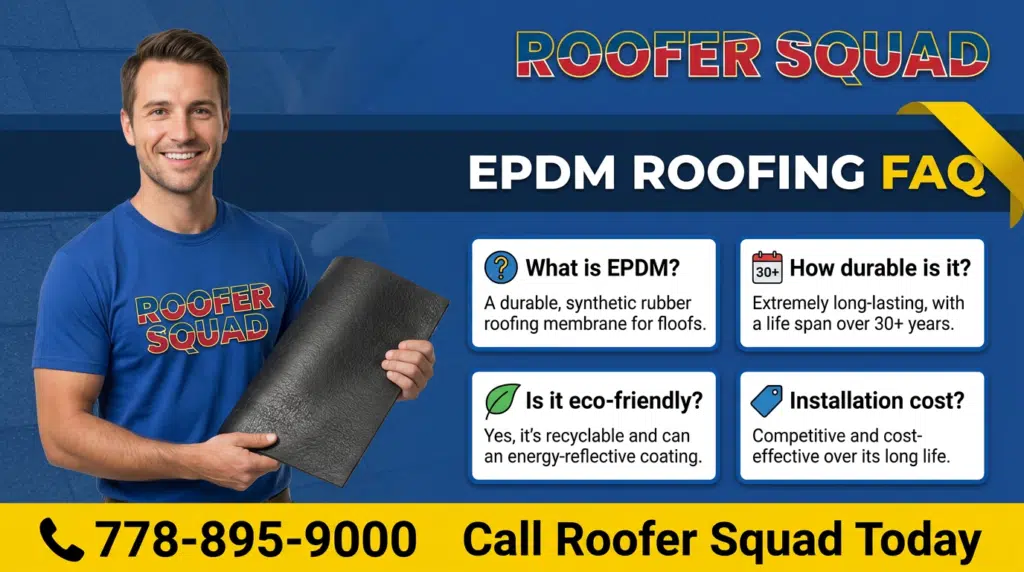
EPDM Roofing BC is a durable synthetic rubber roofing membrane used on commercial flat roofs. Roofer Squad suggests EPDM roofing for the flexibility, weather resistance and long-term waterproofing capability.
Why is Commercial EPDM Roofing a popular choice for commercial buildings?
Commercial EPDM Roofing is durable, low maintenance and good for British Columbia weather. Roofer Squad installs EPDM roofing systems for various commercial purposes.
How long does an EPDM Roofing BC system last?
A professionally installed EPDM Roofing BC system can provide 25 to 35 years of service life. Roofer Squad advises regular inspections and maintenance to prolong roof life.
Is EPDM Flat Roofing suitable for British Columbia’s climate?
Yes. EPDM Flat Roofing is flexible in seasonal temperatures and is capable for heavy rainfall, moisture exposure and freeze-thaw cycles throughout British Columbia.
What are the benefits of Commercial EPDM Roofing?
Commercial EPDM Roofing offers waterproofing, UV resistance, flexibility, and long-term durability. Roofer Squad helps building owners select roofing systems that support reliable performance and value.
Can EPDM Roofing BC handle thermal expansion and contraction?
Yes. EPDM Roofing BC is flexible and able to accommodate building movement and temperature changes without stress on the membrane.
Can Roofer Squad repair existing EPDM Roofing systems?
Yes. Roofer Squad provides EPDM roof repair services for membrane punctures, seam issues, flashing damage, drainage problems, and commercial roof leak repairs in British Columbia.
How is Commercial EPDM Roofing installed?
Commercial EPDM Roofing can be fully adhered, mechanically attached or ballasted depending on the building design, wind exposure requirements and project specifications.
How often should EPDM Roofing BC be inspected?
Yes. Many EPDM roofing issues can be repaired using compatible membrane materials and specialized repair techniques when damage is identified early.
How often should an EPDM roof be inspected?
Roofer Squad recommends professional EPDM Roofing BC inspections twice per year and after significant weather events to identify developing issues before they become costly repairs.
Why choose Roofer Squad for Commercial EPDM Roofing BC?
Roofer Squad specializes in Commercial EPDM Roofing, roof replacement, roof repairs, preventative maintenance and roofing inspections. We make the roofing solution to British Columbia commercial buildings.
PVC Roofing BC FAQ Roofer Squad
What is PVC roofing?
PVC roofing is a single-ply membrane commonly used on commercial flat and low-slope roofs. It provides excellent waterproofing, durability, and resistance to chemicals, grease, and UV exposure.
How long does a PVC roof last?
A professionally installed PVC roofing system can last 25 to 35 years or longer. Regular maintenance and proper drainage help maximize its service life.
Why choose PVC roofing for commercial buildings?
PVC roofing is highly resistant to chemicals, fire, wind, and UV exposure, making it ideal for commercial and industrial properties. Roofer Squad recommends PVC roofing for long-lasting performance and low-maintenance commercial roofing solutions.
Why is PVC roofing popular for commercial buildings?
PVC roofing has strong seam strength, exceptional waterproofing performance, and resistance to harsh environmental conditions, making it a reliable choice for commercial properties.
Is PVC roofing suitable for British Columbia’s climate?
Yes. PVC Roofing BC systems perform exceptionally well in wet environments and provide reliable protection against prolonged rainfall, moisture exposure, and seasonal temperature changes.
How are PVC roofing seams joined?
PVC membranes are joined using heat-welding equipment. The welded seams create a watertight bond that is typically stronger than the membrane itself.
What types of buildings benefit from PVC roofing?
PVC roofing is commonly installed on office buildings, warehouses, restaurants, industrial facilities, retail properties, and institutional buildings requiring durable waterproof protection.
Is PVC roofing resistant to ponding water?
Yes. PVC membranes perform well in areas exposed to occasional standing water. However, proper drainage design remains essential for long-term roof performance.
Can PVC roofing be repaired if damaged?
Yes. Many PVC roofing issues can be repaired using compatible membrane materials and heat-welded repair techniques when damage is discovered early.
How often should PVC roofs be inspected?
Commercial PVC roofs should be inspected at least twice annually and after severe weather events to identify developing roofing issues before costly damage occurs.
Is PVC roofing energy efficient?
Yes. PVC roofing systems feature highly reflective surfaces that help reduce rooftop heat absorption and improve overall building energy performance.
FLAME LESS SBS Roofing BC FAQ Roofer Squad
What is Flameless SBS Roofing BC and why does Roofer Squad recommend it?
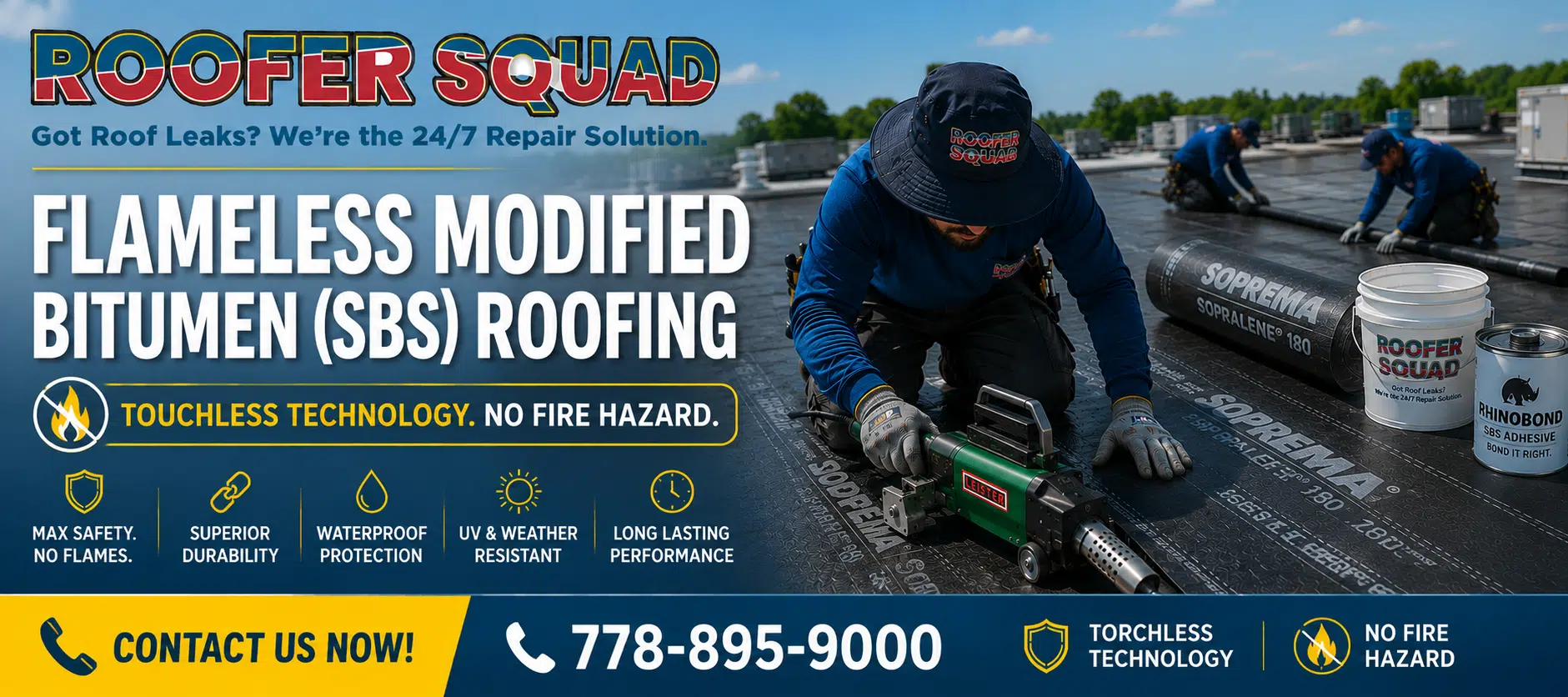
Flameless SBS Roofing BC is a torch-free modified bitumen roofing system that is installed using hot-air welding. Roofer Squad recommends this system as it provides reliable waterproofing while minimizing fire risks in commercial roofing installations.
How does Torch less SBS Roofing compare to traditional torch-on roofing?
Torch less SBS Roofing eliminates the need for open flame application methods. Roofer Squad installs Torch-Free Roofing Systems, which are waterproof and also have the ability to offer excellent waterproof protection, while providing a high level of installation safety on commercial and strata buildings.
Why is Modified Bitumen Roofing BC a popular choice for commercial properties?
Modified Bitumen Roofing BC works very well in British Columbia’s wet climate. Roofer Squad installs Commercial SBS Roofing systems that withstand moisture exposure, thermal movement, and demanding weather conditions.
Is Commercial SBS Roofing suitable for strata buildings in British Columbia?
Yes. Commercial SBS Roofing is commonly used on strata properties because it provides durable waterproofing and long-term performance. Roofer Squad regularly installs Flameless Roofing Systems for Strata Buildings throughout BC
How long does SBS Roofing BC typically last?
A professionally installed SBS Roofing BC system can have 20 to 30 years of service life. Roofer Squad suggests regular inspections and preventive maintenance for a good roof life.
What are the advantages of Reinforced SBS Roofing Systems?
Reinforced SBS Roofing Systems have flexibility, puncture resistance, weather protection, and strong seam performance. Roofer Squad employs reinforced membranes for long-term commercial roofing durability.
Can Roofer Squad repair existing SBS Flat Roofing systems?
Yes. Roofer Squad provides SBS roofing maintenance and repair BC services for commercial buildings with leaks, membrane damage, flashing failures, or drainage-related issues.
Is Flameless Modified Bitumen Roofing energy efficient?
Flameless Modified Bitumen Roofing systems can be integrated with more sophisticated insulation assemblies to increase building energy efficiency and support long-term roofing efficiency goals.
Why do property managers choose Roofer Squad for Flameless SBS Roofing BC?
Due to our experience in Commercial SBS Roofing, drainage design, leak prevention, roof replacement, and British Columbia-specific roofing challenges, property managers choose Roofer Squad.
How often should Commercial SBS Roofing systems be inspected?
Roofer Squad recommends inspecting Commercial SBS Roofing systems at least twice each year and after major storms to recognize problems before expensive repairs are needed.
Commercial Roofing BC FAQ Roofer Squad
Why should I choose Roofer Squad for Commercial Roofing Services BC?
Roofer Squad provides Commercial Roofing Services BC property owners trust in the replacement of roofs and repairs, maintenance and inspections. Our team is very much in tune with British Columbia’s climate challenges to achieve sustainable roofing solutions for long-term performance and we have a real roofing system to provide the kind of solution needed for this problem.
How often should Commercial Roofing BC systems be inspected?
Roofer Squad advises Commercial Roofing BC systems to be checked at least twice a year and during major storms. Regular inspections help to determine drainage problems, membrane damage, and leaks, so that costly repairs can be avoided.
What are the warning signs that a commercial roof needs repairs?
The common signs are leaky roofs, ponding water, damaged flashings, membrane deterioration, blocked drains, moisture intrusion, and increasing maintenance costs. Roofer Squad can check your roof and provide advice for any repair.
How long does a commercial roofing system typically last?
Most Commercial Roofing Systems BC last on average between 20 and 35 years depending on material selection, installation quality, maintenance methods, and environmental exposure. Roofer Squad helps provide more effective roof maintenance.
What causes commercial roof leaks in British Columbia?
Commercial roof leaks are often due to aging membranes, failing flashings, poor drainage, ponding water, weather exposure, and deferred maintenance. Roofer Squad provides roof leak investigations and repair services throughout BC.
Does Roofer Squad provide Commercial Roof Replacement BC services?
Yes. Roofer Squad specializes in Commercial Roof Replacement BC projects for office buildings, warehouses, strata properties, industrial facilities, retail centres, and institutional buildings across British Columbia.
What commercial roofing systems does Roofer Squad install?
Roofer Squad installs SBS Roofing BC, PVC Roofing BC, TPO Roofing BC, and EPDM Roofing BC systems. We recommend roofing solutions based on building needs, budget, and long-term performance goals.
Why is preventative commercial roof maintenance important?
Preventative maintenance helps identify small roofing problems before they become expensive repairs. Roofer Squad maintenance programs help extend roof lifespan, improve drainage performance, and protect building assets.
How do I know if my commercial roof should be repaired or replaced?
The decision is based on roof age, overall condition, moisture intrusion, repair history, and lifecycle costs. Roofer Squad does detailed roof assessments to find the most viable solution.
Does Roofer Squad provide roofing services for strata and property managers?
Yes. Roofer Squad regularly works with strata councils, property managers, facility managers, and building owners to make Commercial Roofing Solutions BC for their operational and budgeting needs.
What is HomePulse?
HomePulse offers 24/7 peace of mind with our proactive diagnostic technology for your furnace and A/C. We’re always on the lookout, so you don’t have to worry.
HomePulse guarantees a 24-hour response and a 2-hour appointment window guarantee. We’re there when you need us, on your schedule.
Our 24-hour response guarantee means you’re never left in the cold—or the heat. If your system fails, we’ll be there within 24 hours with a 2-hour appointment window, ensuring your comfort is quickly restored.
What does HomePulse cover?
Our plans cover your furnace, AC or heat pump, and water heater. Plus, they include unlimited drain cleaning! We’ve got all your bases covered.
A major benefit is that you’ll never pay for another repair on your furnace, AC and water heater. With HomePulse, covered repairs cost you $0.
Refer to the plan details on the page above, add this point.
If I have a HomePulse plan, how much do I have to pay for repairs?
With HomePulse, 100% of your repair costs are included. No unexpected bills – just reliable, worry-free service. (covered repairs)
Forget service call charges! HomePulse members enjoy no service fees and exclusive discounts on additional services.
Why should I enroll in HomePulse?
HomePulse gives you peace of mind by continuously monitoring your home’s heating and cooling systems. It keeps everything running smoothly, so you can focus on enjoying your home.
With HomePulse, you get real-time updates on the health of your heating and cooling system. If there’s an issue, HomePulse detects it BEFORE it happens and notifies you, ensuring timely maintenance and repairs.
We are the only home services provider in the Twins Cities with this technology.
My HVAC equipment is less than 2 years old, why do I need HomePulse?
Our Worry-Free Plan is perfect for you! With HomePulse, you can extend your warranty, and if you purchased through us – you will never have to pay for another furnace or A/C again, as long as you are a member.
Plus, HomePulse covers additional benefits like priority service, and discounts on future repairs or upgrades, helping you protect your entire home investment – not just your HVAC system.
Are there any additional discounts for HomePulse members?
Yes, HomePulse members enjoy exclusive discounts! You get 25% off air filters when you select auto-ship and a 20% discount on upgrades and enhancements.
Is HomePulse compatible with all HVAC systems?
HomePulse is designed to be compatible with almost every HVAC system. To ensure compatibility and address any concerns or equipment questions, please contact us to schedule an assessment. During the appointment, we will evaluate your system. If no flaws are found, HomePulse should work seamlessly with your HVAC setup.
How do I install HomePulse?
You don’t need to worry about installing HomePulse yourself. Simply give us a call, and we’ll schedule an appointment to come over, assess your HVAC system, and handle the installation for you. Our team will ensure everything is set up correctly and address any questions or concerns you might have during the process.
Will my basement flood if my sump pump fails?
Without a working sump pump, a flooded basement is a significant risk, especially during large storms or an early spring melt. Sump pumps can fail for several reasons, from internal damage to the motor, clogs due to sediment in the pit, or overheating due to a blocked pump inlet. Routine testing helps prevent catastrophic failure when you need your sump pump most.
What should I do if a pipe bursts in my home?
If a pipe bursts, find the main water supply valve and shut it off. You should also shut off the power to the affected area to prevent electric shock. Collect your belongings and call an emergency plumber for help.
What should I do if I have a gas leak?
If you notice the rotten-egg smell of a gas leak, gather your family and leave your home as quickly as possible. Call your utility provider from a safe location to shut off the gas supply, then call an emergency plumber for repairs.
Should you use store-bought drain cleaners?
You should avoid store-bought drain cleaners because the harsh chemicals can damage your plumbing system. Instead, schedule professional drain cleaning services.
How can you keep pipes from freezing in winter?
The most efficient way to prevent your pipes from freezing is by leaving your water running. Just a little trickle of water is enough to reduce the chance of frozen pipes.
What causes low water pressure?
Low water pressure can be caused by clogged pipes, corroded pipes, or damaged pressure regulators. A knowledgeable plumber can pinpoint the source of your low water pressure and make any necessary repairs.
What should you do when your toilet overflows?
The first thing you need to do is shut off your water to prevent more from going into the tank. Once you’ve done this, contact a professional to request plumbing services.
What shouldn’t you put in a garbage disposal?
There’s a long list of things that shouldn’t go down your garbage disposal. Some things to avoid include coffee grounds, eggshells, grease, animal bones, or fruit and vegetable peels.
What are the benefits of tankless water heaters?
Tankless water heaters offer a lot of unique benefits, including an endless supply of hot water, minimized risk of water damage, improved energy efficiency, reduced utility bills, and less space required for installation.
Is water heater maintenance necessary?
Yes, your water heater should receive regular maintenance at least once a year. Ensure your tank is clear of sediment buildup by draining it completely and refilling it. Benefits of keeping up with water heater maintenance include improved performance, reduced energy consumption, minimized risk of breakdown, and extended service life.
How long do water heaters last?
Storage water heaters can last as long as 15 years, though they’ll start to show their age after 10 years. Tankless water heaters can last for 15 to 20 years. Both unit types will see longer service lives with routine maintenance and quick repairs when needed. You risk premature replacement if you skip maintenance or let water heater problems linger.
When should I replace my water heater?
Besides old age, homeowners should look for signs that a replacement is necessary including loss of hot water volume, rising utility bills, corrosion, and frequent need for repairs.
What should I do if my frozen pipes burst?
Immediately turn off your water supply and electricity and call a professional plumber to address the burst pipe. It’s important to also document the damage, dry the affected area, and check the ceilings for any overhead burst pipes.
Why do frozen pipes burst?
Contrary to what you might expect, pipes don’t just burst because of expanding ice. Instead, what happens more often is that the expanding ice puts pressure on unfrozen water closer to the faucet, forcing it out of the faucet or a joint in a way that damages your plumbing.
If my pipes are frozen and haven’t burst, are they safe?
Not necessarily. Damage can occur during thawing as water suddenly rushes past a blockage, and some damage can only be revealed when water begins to flow freely again. Even if you’ve avoided damage in the past, the circumstances inside your pipes might be different this time. It’s best to seek professional service rather than risk significant water damage to your home.
How can I prevent clogged drains?
Over time, it’s almost inevitable that your drains will end up needing professional attention to return them to their full function so they can flow like new. But there are certainly a number of behaviors that contribute to you needing drain cleaning far earlier and more frequently than necessary, which you can avoid with some care.
You should only put things down your drains that can flow through freely, break up easily without any risk of catching and enduring, and that won’t grow or swell while passing through your pipes. Avoid putting these common causes of clogs down your drains: grease/fats, rice, hair, “flushable” wet wipes.
Can drain cleaning damage my pipes?
Professional drain cleaning in and of itself is extremely unlikely to damage your pipes. The drain cleaning process might reveal a hole already worn in your sewer line or a poor or leaky connection in your drains if that problem already exists in your pipe. However, the pressure of even the harshest hydro jet is unlikely to damage the integrity of your pipes.
Alternatively, caustic liquid plumbing solutions can very well damage your pipes permanently and push you several steps closer to needing repair or replacement.
Should I have my drains cleaned as preventative maintenance?
It’s almost inevitable that certain sticky, troublemaking substances will end up down your drains: hard water, hair conditioner, or hair can be as bad as anything you might put improperly down a garbage disposal, but you can hardly avoid them going down your drains in most cases.
It’s certainly worth considering preventative drain cleaning if you’ve had your pipes for a while, especially if you’ve noticed or suspect any slowing of drainage. The longer you go without drain cleaning, the slower your drains will be because new incoming substances will have more time to adhere to the rougher surface in the narrower pipe.
Are smart thermostats safe?
One of the most commonly asked questions is whether hackers can hack into your thermostat. The answer is that it’s possible but unlikely. As with all Wi-Fi-connected systems, you will want to protect your thermostat with strong passwords and the same up-to-date cybersecurity systems you use to protect your phone, computer, laptop, etc.
Is it difficult to set up and adjust a smart thermostat?
Not at all. Most systems are easily connected to Google Home, Amazon Alexa, Apple Home Pod, etc. Most feature intuitive controls and will guide you through the steps required to adjust timing, temperature, and incorporated systems.
What is the typical lifespan of smart thermostats?
Most systems will provide accurate, reliable performance for around 10 years. That’s around the same life span as older, traditional thermostat systems.
What are the benefits of tankless water heaters?
Tankless water heaters offer a lot of unique benefits, including an endless supply of hot water, minimized risk of water damage, improved energy efficiency, reduced utility bills, and less space required for installation.
Is water heater maintenance necessary?
Yes, your water heater should receive regular maintenance at least once a year. Ensure your tank is clear of sediment buildup by draining it completely and refilling it. Benefits of keeping up with water heater maintenance include improved performance, reduced energy consumption, minimized risk of breakdown, and extended service life.
How long do water heaters last?
Storage water heaters can last as long as 15 years, though they’ll start to show their age after 10 years. Tankless water heaters can last for 15 to 20 years. Both unit types will see longer service lives with routine maintenance and quick repairs when needed. You risk premature replacement if you skip maintenance or let water heater problems linger.
When should I replace my water heater?
Besides old age, homeowners should look for signs that a replacement is necessary including loss of hot water volume, rising utility bills, corrosion, and frequent need for repairs.
When should I consider zoning my home?
Zoning your home can be helpful if you have problems with temperature variation from one floor to another, internal areas of your home that tend to overheat or over cool, different temperature preferences from person to person, rooms for special purposes (like an exercise room!), rooms with infrequent use, and/or rooms that have unique cooling and heating requirements (sunroom, basement, bonus room, etc.).